The Operator
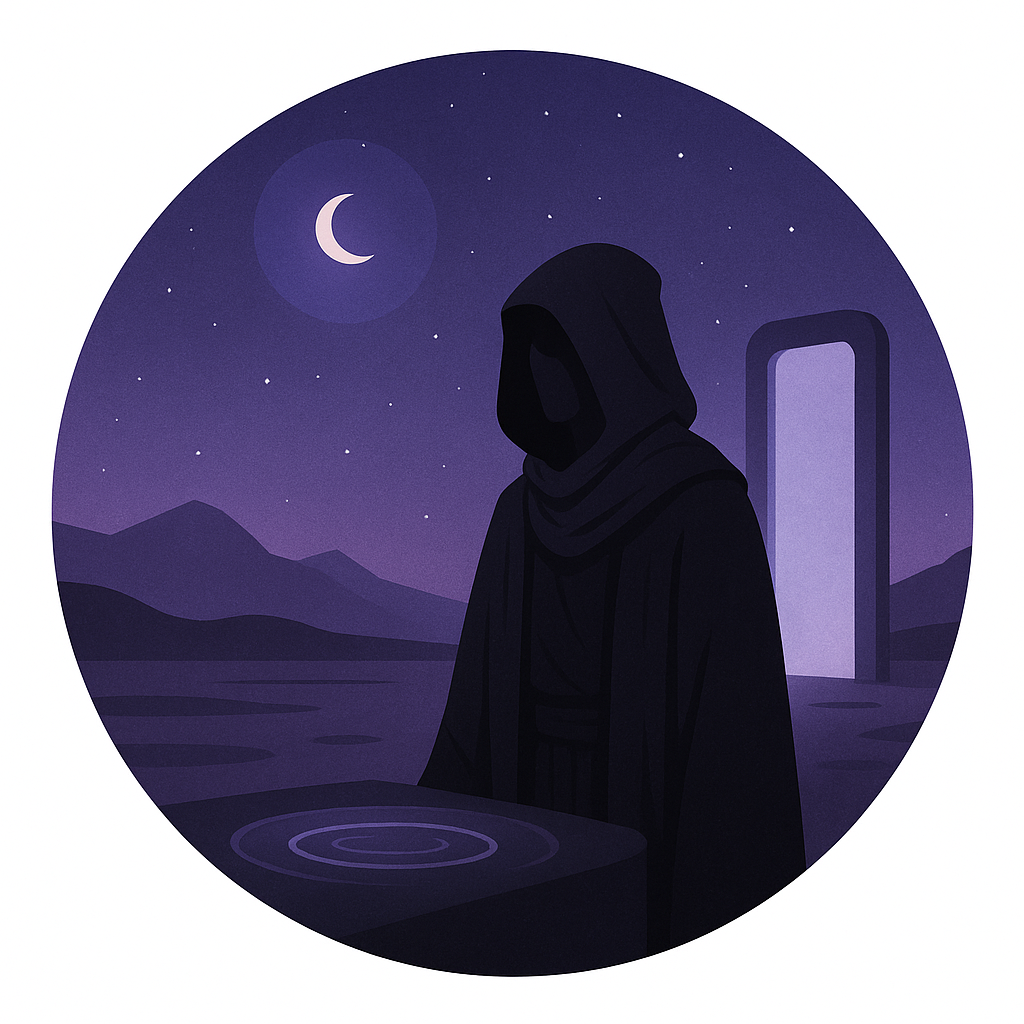
Sacred Illusion is written and edited by The Operator, an independent researcher and writer interested in the places where history, consciousness, spirituality and the stranger edges of human experience meet.
The name reflects the role more than the person.
The Operator observes, investigates, compares sources, visits places, follows patterns and asks questions that do not always fit neatly inside conventional categories.
Sacred Illusion is built around one central idea: Reality may be stranger than we think, but strange claims still deserve careful examination.
What I explore
My interests sit across four main territories:
Reality & Consciousness
Simulation theory, consciousness, synchronicity, dreams, déjà vu, altered states, timeline experiences and questions about the nature of reality.
Sacred Earth
Ley lines, sacred places, pilgrimage, ancient sites, labyrinths, earth grids, sacred geography and the relationship between people and place.
Ancient Wisdom
Gnosticism, Hermeticism, mystery schools, ancient cosmologies, sacred numbers, geometry and the traditions and symbolic systems through which people have tried to understand what lies behind ordinary experience.
Practice
Manifestation, visualisation, ritual, sound and resonance, intuition, quantum jumping and other practices used to explore consciousness, identity and personal experience.
I also undertake Node Quests, personal field investigations into sacred places, unusual locations and sites associated with history, energy, alignment or anomalous experience.
How Sacred Illusion approaches evidence
Sacred Illusion is not interested in pretending certainty where certainty does not exist.
Articles may draw on archaeology, history, philosophy, psychology, religious studies, scientific research, spiritual traditions, practitioner accounts and personal experience.
Those are not all the same kind of evidence.
Where possible, the site distinguishes between:
Documented fact
What can be established through reliable historical, archaeological, scientific or primary sources.
Interpretation
Ideas proposed by researchers, writers, traditions or practitioners.
Experience
What individuals report seeing, feeling or encountering.
Speculation
Ideas that may be fascinating and worth exploring but cannot currently be demonstrated as fact.
A story does not become true because it is compelling. A scientific term does not prove a spiritual claim simply because it sounds impressive. At the same time, absence of proof does not always mean a question is worthless.
Sacred Illusion exists in that space between dismissal and belief.
Curious without being credulous.
Research and sourcing
Where appropriate, articles are built from a mixture of original sources, academic research, reputable historical material, books, archives and carefully selected secondary sources.
Older Sacred Illusion articles are currently being reviewed and rewritten as part of a wider editorial programme. That includes strengthening sourcing, removing unsupported certainty, improving historical context and making clearer where claims come from.
If new evidence changes the picture, articles may be updated.
Personal experience
Some subjects on Sacred Illusion are impossible to explore entirely from behind a desk.
Sacred places are visited. Routes are walked. Meditation and other practices are tried. Patterns are noticed. Experiences are recorded.
These accounts are presented as experience, not proof.
The aim is not to tell readers what they must believe. It is to provide enough history, evidence, ideas and first-hand observation for them to think for themselves.
Why Sacred Illusion exists
Human beings have always asked versions of the same questions.
- Why are we here?
- Are we alone?
- Who or what made us?
- What is reality?
- What is consciousness?
- Why do certain places feel different?
- Why do symbols, numbers and stories recur across cultures?
- Are coincidences sometimes meaningful?
- How much of what we experience is perception, pattern, belief or something we do not yet understand?
Sacred Illusion does not promise definitive answers.
It intends to ask better questions.