Ancient Wisdom
Explore the philosophies, sacred texts and esoteric traditions through which earlier cultures tried to understand consciousness, reality, death and our place within the cosmos.
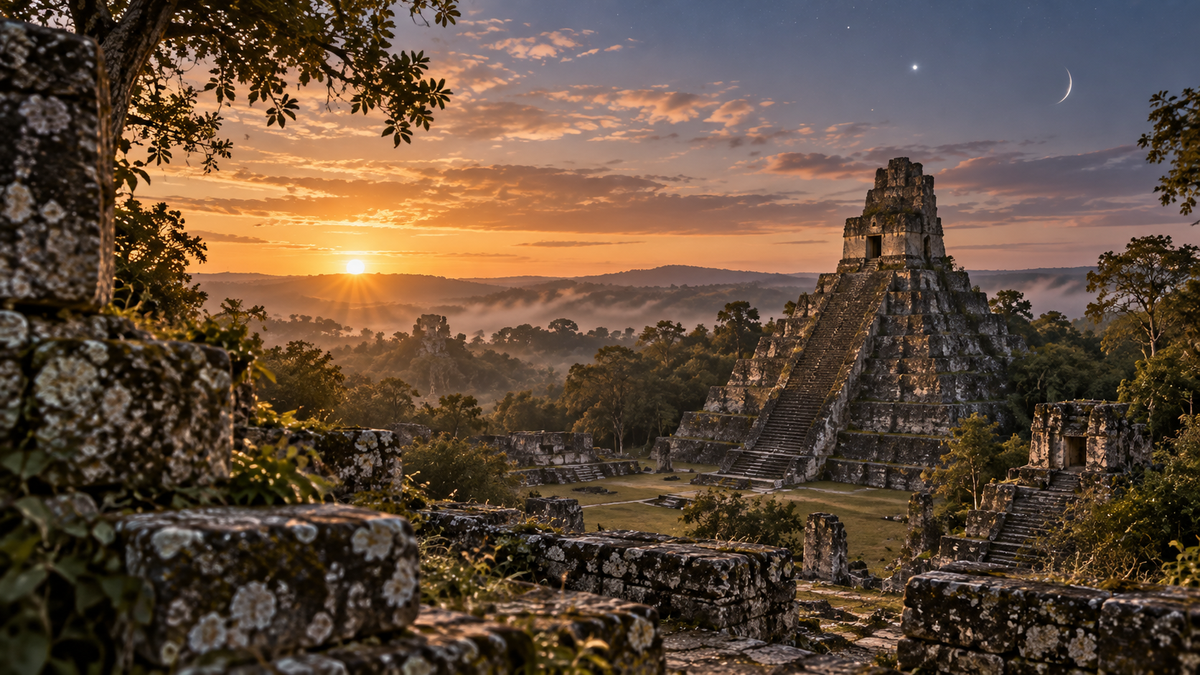
Long before consciousness became a scientific problem, human beings were already asking what we are, what happens when we die and whether the world we perceive is the whole of reality.
They answered those questions in very different ways.
Some entered secret initiatory rites. Some developed intricate philosophies of mind and existence. Some watched the stars, preserved knowledge through oral traditions or created sacred texts that challenged the religious orthodoxies around them.
Ancient Wisdom explores those traditions without pretending they all taught the same thing, or that everything described as ancient is automatically true.
Here you will find Mystery Schools and initiation, Gnostic cosmology and lost Christian texts, Vedic and Tibetan traditions, Druids and ancient astronomy, Hermeticism, alchemy and the stranger edges of hidden history.
The aim is simple: follow the mystery, but keep the history visible.
Start here
If you are new to Ancient Wisdom, these are the best places to begin.
Mystery Schools: Initiation, Hidden Knowledge and the Ancient Mysteries
What actually happened inside the mystery traditions of the ancient Mediterranean? Explore Eleusis, Isis, Mithras, Orpheus and the later idea of the Mystery School, separating historical initiation from the universal secret-school tradition constructed around it.
Gnosticism: The Divine Spark, the Demiurge and the Search for Hidden Knowledge
Gnostic texts turn familiar religious assumptions inside out. The creator may not be the highest God, human beings may contain a trace of a greater reality, and liberation begins not simply through belief but through gnosis: direct knowledge.
Why So Many Ancient Traditions Said Reality Is Not What It Seems
Maya, Plato's Cave, Buddhist emptiness and Gnostic cosmology are often bundled together as ancient versions of simulation theory. The similarities are fascinating, but their differences reveal just as much.
What the Ancients Knew About the Stars
Egyptians watched Sirius, Babylonian astronomers recorded eclipses, Maya specialists tracked Venus and Pacific navigators crossed oceans using the sky. Ancient astronomy shows what generations of careful observation could achieve without modern instruments.
Explore Ancient Wisdom
Mystery Schools
Secret rites. Restricted teachings. Initiation. Death and rebirth. The possibility that some forms of knowledge had to be experienced rather than simply explained.
The ancient mystery traditions have inspired centuries of speculation about hidden schools preserving a universal spiritual science. The historical picture is more complicated.
Eleusis was real. Mystery cults were real. Initiatory traditions associated with Isis and Mithras were real. Ancient Egyptian temples did preserve restricted knowledge. Hermetic traditions genuinely emerged from the Greco-Egyptian world.
But the idea that all of them belonged to one continuous global Mystery School is largely a later reconstruction.
That tension is exactly what makes them worth exploring.
Begin with:
- Mystery Schools: Initiation, Hidden Knowledge and the Ancient Mysteries
- The Eleusinian Mysteries: Grain, Darkness and the Secrets of Return
- Egypt's Mystery Schools: What the Priests Really Knew
- Thoth, Hermes and the Mystery Schools
- The Seven Stages of Alchemy: What the Emerald Tablet Really Says
Gnosticism
What if the world was not created by the highest God?
What if something within us belonged to a reality beyond this one?
What if salvation depended less on obedience than on remembering what we really are?
Those questions sit at the heart of the traditions now grouped under the name Gnosticism.
Texts discovered at Nag Hammadi revealed extraordinary versions of early Christianity and late-antique spirituality: Sophia, the Demiurge, the Archons, the divine spark and hidden teachings attributed to Jesus.
There was never one Gnostic church or single Gnostic theology. Different movements produced different cosmologies and disagreed about fundamental questions.
What connects many of them is a profound suspicion that ordinary appearances conceal a deeper spiritual reality.
Begin with:
- Gnosticism: The Divine Spark, the Demiurge and the Search for Hidden Knowledge
- The Gospel of Thomas: The Hidden Sayings of Jesus
- The Hidden Teachings of Christ: What the Gnostic Gospels Really Say
- Gnostic Creation: Sophia, the Demiurge and the Architecture of Reality
- Gnostic Initiation and the Divine Spark
Ancient Traditions
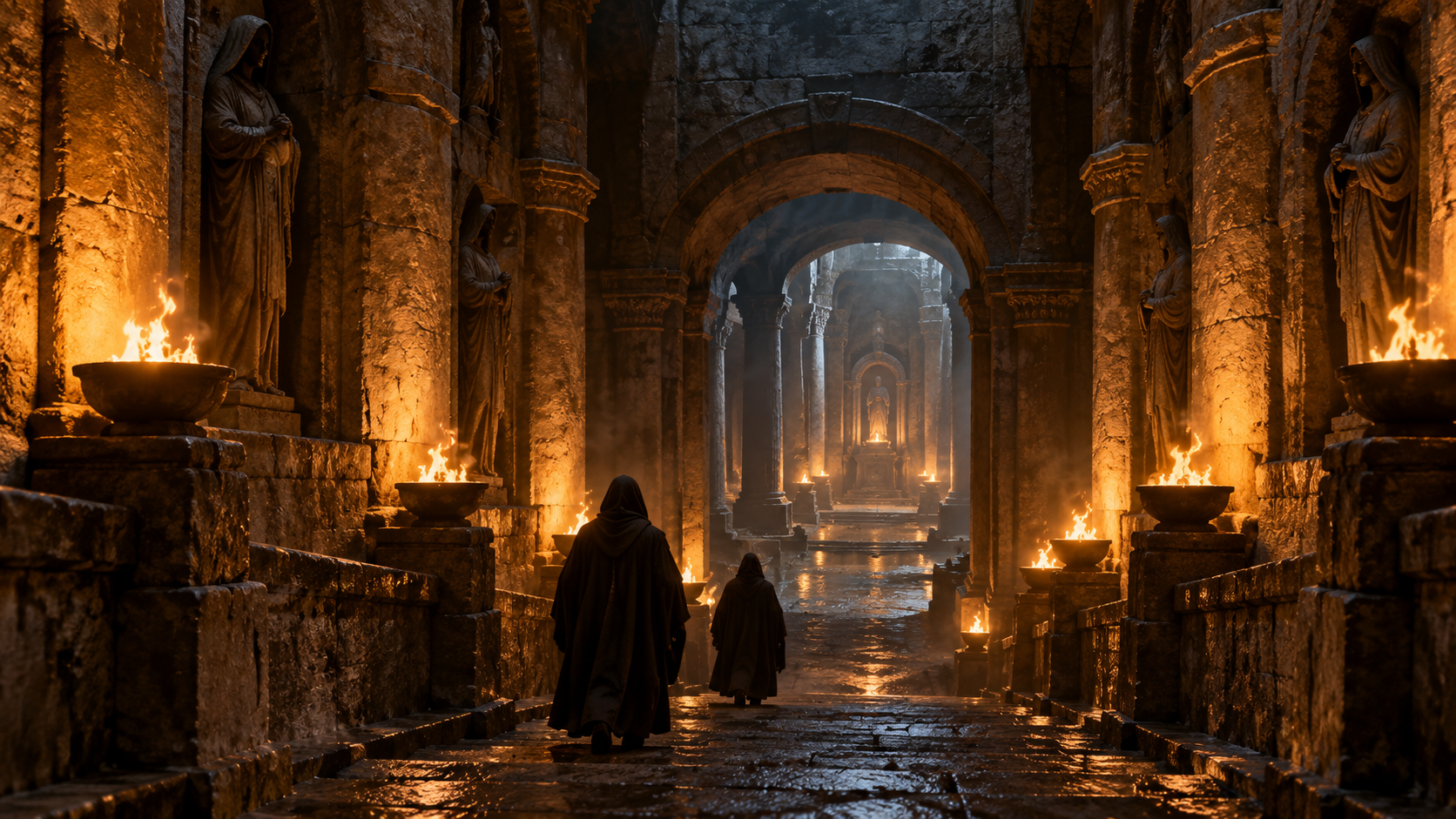
Not every ancient spiritual tradition was a Mystery School.
Some developed through philosophical schools, monastic lineages, oral teaching, ritual practice or cultures in which religion, astronomy, medicine and philosophy were never separated in the way they are today.
Ancient Traditions explores that broader landscape.
Here you will encounter Vedic ideas about consciousness and sound, Tibetan practices involving dreams and death, Druidic learning and sacred landscape, ancient astronomy, oracles and the mysterious Magi who followed a star into the Gospel of Matthew.
The emphasis is on understanding a tradition on its own terms first.
Only then can we ask the more speculative questions: what still resonates, what later traditions transformed and whether ideas separated by thousands of miles and years sometimes point towards similar human experiences.
Explore:
- Vedic Traditions: Sound, Breath and the Nature of Consciousness
- Tibetan Mysticism: Dream Yoga, Bardos and the Mystery of the Rainbow Body
- Druidic Wisdom: Trees, Stars and the Memory of the Land
- Who Were the Magi, and What Did They Really Know?
- What the Ancients Knew About the Stars
- Why So Many Ancient Traditions Said Reality Is Not What It Seems
- Oracles and the Science of Intuition
Hidden History
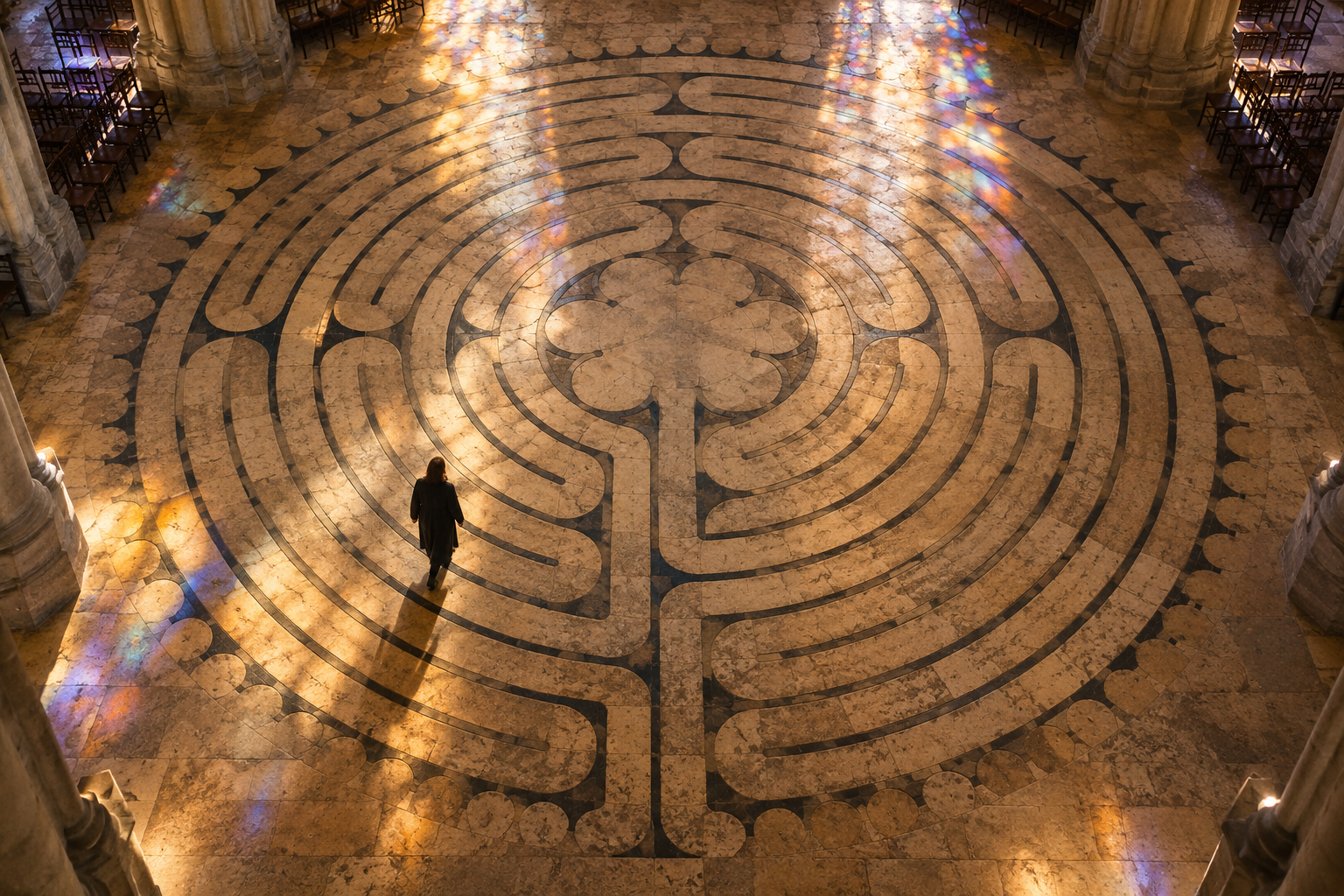
Some questions sit awkwardly between archaeology, folklore, alternative history and modern mythology.
An artefact appears to be somewhere it should not be.
An ancient story is interpreted as a memory of a forgotten event.
A supposed discovery becomes evidence for a lost civilisation.
An idea rejected by historians survives for decades because it offers a more exciting explanation of the past.
Hidden History is where Sacred Illusion examines those claims.
The purpose is not to assume the conventional account must always be correct, nor to assume an alternative explanation becomes true simply because it is more mysterious.
Instead, we follow the evidence as far as it goes and pay close attention to the point where evidence becomes interpretation.
That boundary is often where the most interesting stories begin.
Ancient knowledge was never one thing
It is tempting to imagine that all ancient cultures possessed fragments of one original teaching.
Hermeticism, Buddhism, Vedic philosophy, Gnosticism, Egyptian religion and Druidic tradition can then become pieces of a lost universal system.
Sometimes there are striking parallels.
Cultures repeatedly questioned the reliability of appearances. They developed practices for altered states of consciousness. They connected human life with celestial cycles. They imagined death as transformation rather than simple extinction. They preserved knowledge through initiation, ritual, story and disciplined practice.
But similarity is not the same as common origin.
The traditions explored here arose in different places, languages and historical circumstances. Their differences matter because they show just how many ways human beings have tried to solve the same fundamental problems.
The questions that refuse to disappear
Beneath the different traditions, several questions return again and again.
- What is consciousness?
- Is the reality we perceive the whole of reality?
- Does something survive death?
- Can altered states reveal genuine knowledge?
- Why do human beings repeatedly create sacred places?
- Can symbols, ritual and story change the way reality is experienced?
- Is there knowledge that cannot be reached through ordinary reasoning alone?
Ancient cultures did not provide one answer. They left us an extraordinary record of attempts.
Ancient Wisdom follows those attempts into temples, manuscripts, dreams, sacred landscapes, philosophical schools and hidden rites, not because the past necessarily possessed answers we have lost, but because some of its questions are still very much alive.
Keep exploring
Ancient traditions often meet the other worlds of Sacred Illusion.
If you are interested in how these old ideas connect with modern questions about consciousness, synchronicity, dreams and the nature of reality, continue into Reality & Consciousness.
If sacred knowledge becomes inseparable from landscape, pilgrimage, ancient monuments and places people have considered powerful for centuries, explore Sacred Earth.
Or choose one of the four Ancient Wisdom paths: