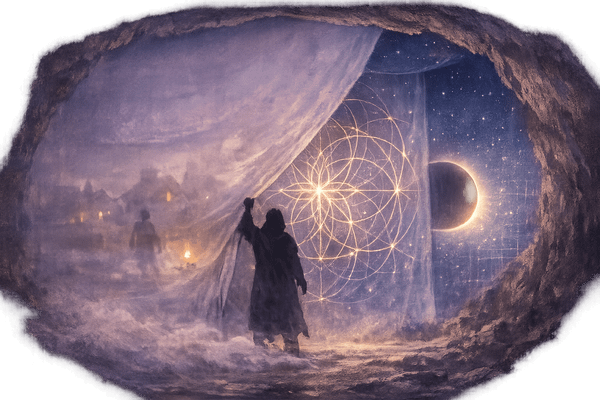
Digital Rituals in Virtual Spaces
Can a screen become part of sacred practice? Digital rituals can carry intention, attention and connection, but technology changes the experience too.
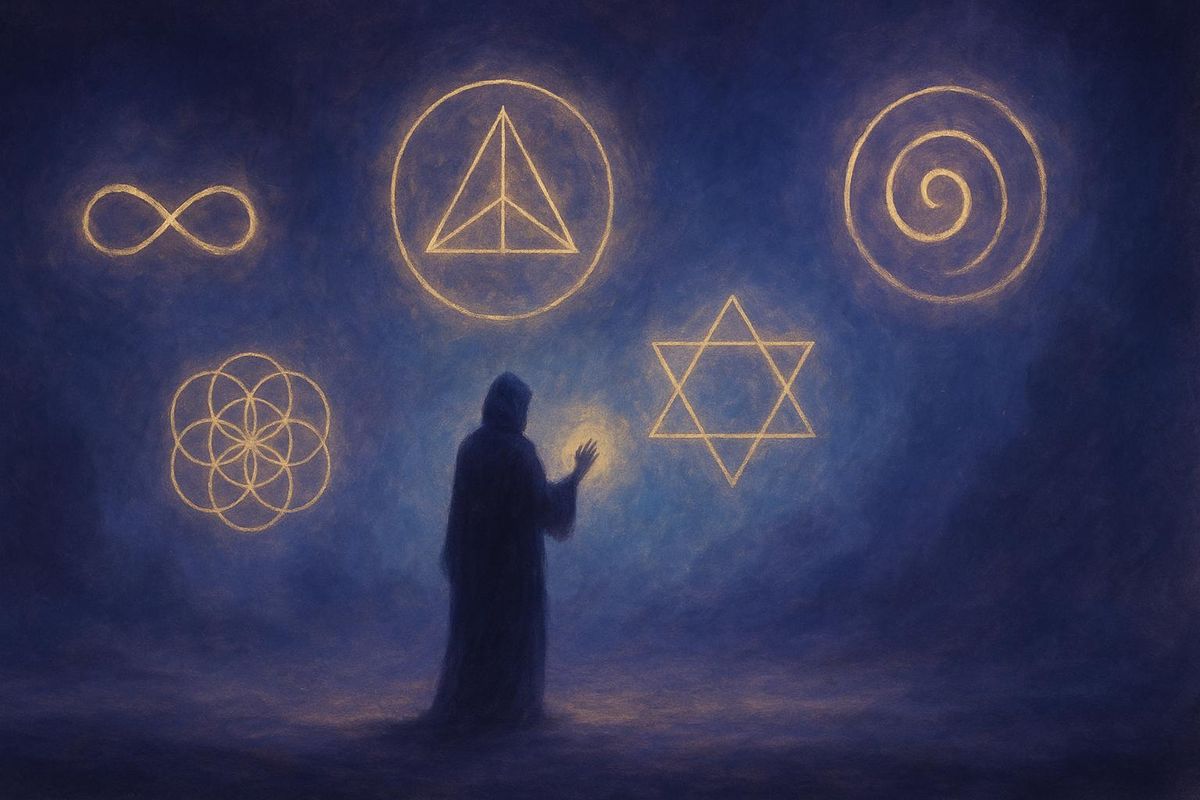
A candle is still a candle whether you light it beside an altar or beside a laptop.
But what happens when the laptop itself becomes part of the ritual?
We increasingly meditate through apps, gather in circles over video calls, keep digital journals, follow lunar calendars on our phones and enter virtual worlds designed to feel sacred. Prayer, intention-setting, remembrance and even pilgrimage now cross the boundary between physical and digital space.
It raises an unexpectedly interesting question.
Can somewhere made of pixels become sacred?
Perhaps. But the interesting part has less to do with technology acquiring mysterious powers and more to do with what humans have always done: mark a boundary, give something meaning, repeat an action and enter it with intention.
What makes something a ritual?
Ritual does not require incense, robes or an ancient temple.
At its simplest, ritual takes an ordinary action and gives it deliberate meaning.
You cross a threshold.
You perform certain actions.
You focus your attention.
Something changes between the beginning and the end.
That pattern appears across religious, spiritual and secular life. Lighting a candle for someone who has died is different from lighting one because the electricity has failed. The physical action may be almost identical. Meaning changes the experience.
Digital ritual works in much the same way.
Opening a meditation app is ordinary behaviour. Turning off notifications, sitting quietly, putting on headphones, choosing a particular meditation and consciously entering ten minutes of reflection begins to resemble ritual.
The screen hasn't become sacred by itself.
Your relationship with the moment has changed.
The sacred has already moved online
Digital spirituality is no longer an odd fringe phenomenon.
People pray together over video calls. Religious services are livestreamed across continents. Online memorials allow families separated by thousands of miles to mourn together. Meditation groups meet every morning without ever sharing the same physical room.
Researchers even study this field under the broad heading of digital religion, examining how technology changes ideas of community, authority, identity and sacred experience.
The distinction between an "online life" and a "real life" has also become increasingly artificial.
The person speaking to you through a screen is real.
The emotion you feel is real.
The attention you give them is real.
A funeral watched remotely cannot reproduce standing beside someone in the same room. But neither does that make the grief, remembrance or connection occurring through the screen imaginary.
Digital ritual belongs inside that ambiguity.
Can a virtual space actually feel sacred?
Sacred places usually acquire meaning through association.
A church is physically made from stone, timber, glass and metal. Yet generations of prayer, ceremony, memory and symbolism alter how people experience the building.
The same process happens on a much smaller scale at home.
A corner used repeatedly for meditation begins to feel different from the chair where you answer emails. The objects may be ordinary. Repetition creates association.
Something similar can happen digitally.
A particular playlist can become associated with meditation.
A private online group can become associated with honest reflection.
A digital journal can become somewhere you tell the truth.
A recurring video gathering can become the place where a scattered community meets every full moon.
Psychologically, none of this requires a mysterious energy being stored inside a server. Attention, memory, expectation and repetition are enough to make one environment feel very different from another.
There is also a metaphysical possibility that Sacred Illusion can leave open.
Some spiritual traditions would argue that intention itself affects a space and that repeated ritual creates something beyond psychological association. Whether anything comparable happens in a virtual environment is unknown.
There is currently no good evidence that websites, video calls or virtual rooms accumulate a measurable spiritual energy.
But as an experiential question?
That territory is much more interesting.
People clearly can experience digital places as meaningful, communal and sacred.
Technology changes the ritual
Moving a practice online doesn't simply copy it.
The medium changes what happens.
A physical ritual engages the body almost automatically. You walk somewhere. Sit beside other people. Smell incense. Hear voices without speakers. Touch objects. Feel temperature, distance and physical presence.
A digital ritual can flatten much of that.
There are also interruptions built into the device itself.
The same phone carrying your guided meditation can suddenly tell you that someone has liked your photograph, your supermarket delivery is ten minutes away and three people are arguing in a WhatsApp group.
Sacred attention and the attention economy occupy the same rectangle of glass.
That matters.
A digital ritual therefore needs stronger boundaries, not weaker ones.
The technology has to become the container rather than the distraction.
How to create a digital ritual that actually feels like one
You don't need virtual reality or elaborate spiritual software.
Start with the architecture of ritual itself.
1. Create a threshold
Do something that marks the transition from ordinary screen use into intentional practice.
Put the phone on Do Not Disturb.
Close every unrelated tab.
Dim the screen.
Light a physical candle.
Take three slow breaths.
The action tells your mind: something different begins here.
2. Give the practice one purpose
Don't open five spiritual apps and scroll for inspiration.
Choose one intention.
Perhaps you want to reflect on a decision, meditate, remember someone, work with a visualisation or join others in shared practice.
Clarity creates the container.
3. Keep a physical anchor
Digital ritual becomes stronger when the body remains involved.
Hold a stone.
Light incense.
Sit on the floor.
Place your hand over your heart.
Write one sentence by hand before beginning.
You remain a physical person even when part of the ritual happens digitally.
4. Remove the feed
Feeds are designed to keep attention moving.
Ritual asks attention to stay.
Where possible, use a specific recording, page, document, private group or video room rather than entering through a social-media feed.
The fewer competing signals, the easier it becomes to create a real sense of separation.
5. Close deliberately
Ritual needs an ending.
Turn off the audio.
Blow out the candle.
Write down what arose.
Stand up.
Take one slow breath and return to the room.
Without an ending, the sacred space dissolves into the next notification.
A simple ten-minute digital ritual
Try this with nothing more than your phone.
Minute 1: Put the device on Do Not Disturb. Sit somewhere quiet and take three breaths.
Minutes 2–3: Write one intention in a note or journal:
What do I need to see clearly today?
Minutes 4–7: Play a piece of music, binaural audio or guided meditation that you already associate with reflection. Close your eyes. Don't touch the screen.
Minutes 8–9: Sit without audio and notice what remains when the stimulation stops.
Minute 10: Write one sentence beginning:
What I know now is...
Then close the app.
The technology has done very little.
That's partly the point.
It created a doorway. You performed the ritual.
What about rituals performed together online?
Shared digital ritual introduces another dimension.
A group doesn't need to occupy the same room to coordinate attention.
People can meditate at the same moment, repeat the same words, listen to the same sound or hold the same intention while physically scattered across the world.
There are straightforward psychological reasons why this can feel powerful.
Synchronised activity strengthens a sense of belonging. Shared symbolism gives people a common focus. Knowing that others are participating can change how seriously we enter the experience.
There may also be a spiritual interpretation of collective intention. Many traditions have long believed that prayer or ritual performed together has a quality that solitary practice does not.
The evidence does not establish that groups generate a measurable field capable of altering external reality.
But group ritual plainly can alter the people inside the group.
It can change attention, emotion, behaviour, relationships and the sense that we are part of something larger than ourselves.
That alone is significant.
Digital ritual and the simulation question
There is an irresistible Sacred Illusion twist here.
If reality itself were ultimately informational or simulated, would the distinction between a digital ritual and a physical one become less important?
Perhaps.
A simulated universe would make our bodies, temples, candles and computers different arrangements within the same underlying system. A ritual performed through a virtual environment would still be an experience occurring inside reality.
But simulation theory does not prove that intention changes code.
Nor does quantum physics establish that consciousness can simply rewrite external events.
The idea works better as a philosophical provocation:
If meaning exists in consciousness rather than objects, where exactly does sacred space begin and end?
A stone circle can become sacred.
A bedroom can become sacred.
A moment can become sacred.
Maybe a digital room can too.
What digital ritual cannot replace
There is still something technology struggles to reproduce.
Embodiment.
Walking into an ancient building.
Standing beside another person.
Touching the earth.
Sharing silence without microphones.
Travelling for days towards a sacred site.
Smelling smoke, rain, stone or forest.
Some practices depend on physical place, community, lineage or bodily participation. Certain religious traditions also make clear distinctions between witnessing a ceremony online and physically participating in it.
Those differences matter.
Digital ritual works best when it extends spiritual life rather than trying to turn every part of it into content.
Sometimes the correct spiritual technology is still to switch the phone off and walk outside.
The screen as threshold
Technology is often blamed for pulling us away from presence.
It certainly can.
But humans have always turned the materials around us into instruments of meaning.
Stone became altar.
Pigment became icon.
Sound became chant.
Paper became scripture.
Perhaps light, code and screens are simply the latest materials we are learning to work with.
They do not automatically become sacred.
We make the threshold.
Then we decide whether to cross it.